**Iris** is loved in perfumery for its cool powder, rooty dryness and the impression of fabric just lifted from a hanger. **Incense** gives that texture air, smoke and a faint ecclesiastical shadow. Together they create not sugary comfort but a composed, almost architectural beauty: the smell of light in a grey room, suede, dust on a root and a thin resin trail.
What the iris and incense accord smells like
If iris leans too lipstick-soft, incense tightens the composition and makes its outline more severe. If incense turns too cold and mineral, iris restores a sense of skin — not sensual, but tactile, like powder on a wrist. That is why the duo often stays close to the skin rather than projecting loudly: first a dry breath, then a smoky veil, then a soft woody shadow. Many contemporary niche compositions are loved precisely for this play of textures.
Who iris and incense perfumes may suit
This accord is rarely chosen for sweetness or for a loud trail. It tends to appeal to those who prefer cool, composed perfumes: cashmere without sugar, a white shirt, a matte lipstick, quiet evening light. If you are drawn to softer takes on iris, begin with our recent piece “Iris perfumes: 4 directions from powder to cold root”, then move deeper into the smoky, resinous side of the family.
Where to begin
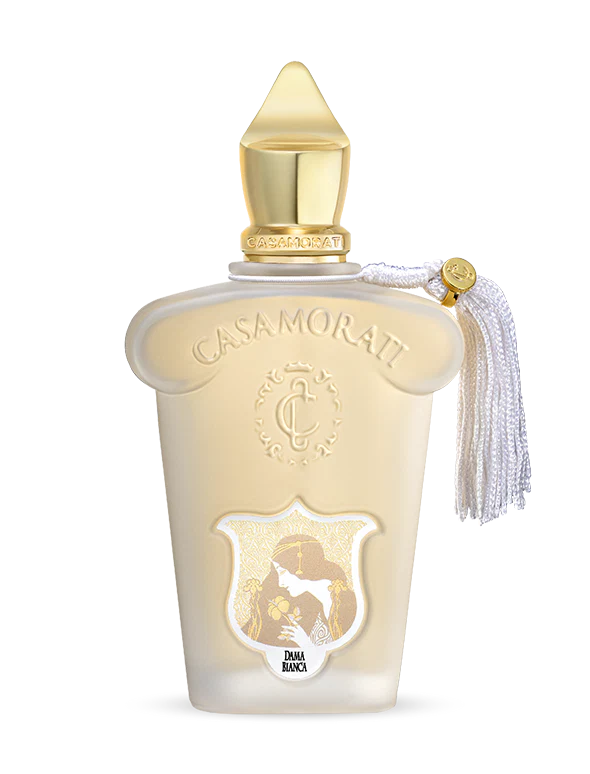
A good starting point is a perfume where iris does not fight incense but breathes beside it. This style is especially beautiful when paired with violet, bright citrus and a creamy base: the accord stays transparent and never collapses into heavy ceremony. That is why Xerjoff Casamorati 1888 Dama Bianca is worth trying: here Italian iris feels soft and luminous, while violet and citrus create that effect of cool powder suspended in air. If you want to understand how niche perfumery works with quietness and texture, this is a fine place to spend an evening with a sample.