**Amouage** began in Oman as a house determined to speak about Middle Eastern perfumery in a contemporary voice. Not a museum-like reconstruction of incense, but a living craft of contrasts: light and smoke, polish and grain, ceremony and skin. That is why Amouage still resonates—there is often a grand gesture, yet inside it you can hear precise material work.
## Amouage house history: from Omani heritage to global niche
In its earlier creations, the brand often leaned into resins, spices, and dense floral fabrics. Over time, the language expanded: more transparency in the opening, more air and texture play, while the architecture remained unmistakable—each fragrance unfolds like a stage with several depth layers. If this dramaturgy speaks to you, see our take on **Amouage Oud Ulya**: /journal/amouage-oud-ulya-dymnyi-attar-s-podpisyu-cecile-zarokian.
## Amouage note DNA: spices, florals, and resinous depth
The house has a visible signature: a spicy impulse at the start, a saturated heart, and a warm, persistent trail. Even when a composition feels gentle, there is usually a structural frame—dry woods, resin, or a dark gourmand accent. These are rarely “background” perfumes: Amouage asks for skin, time, and attention.
## Amouage Love Delight: how the flagship wears today
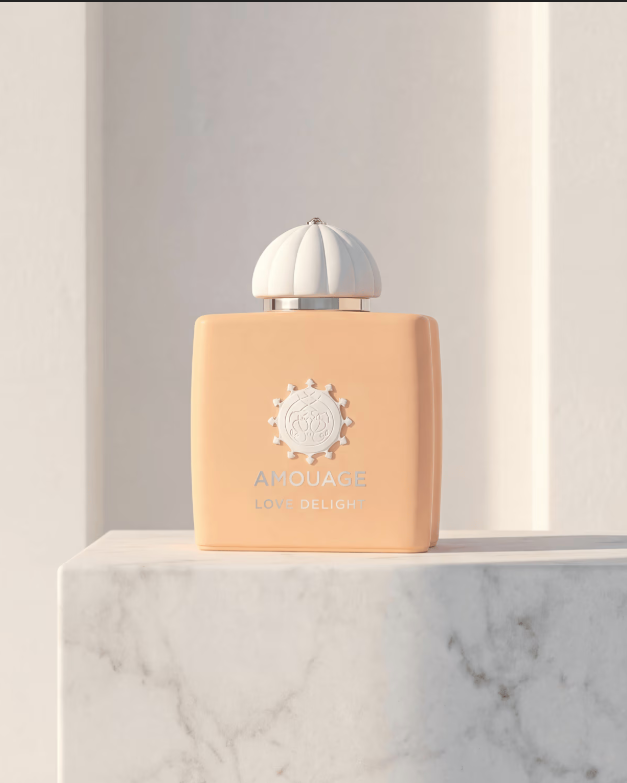
In **Amouage Love Delight** (2024, Pascal Gaurin), that code is especially clear. The opening—ginger, mandarin, cinnamon, and rose water—feels sparkling, juicy, and warmly spiced. In the heart, heliotrope, jasmine, and rose create a creamy, slightly powdery floral body. The base—vanilla, cocoa, rum, and nagarmotha—draws everything into a velvety trail with a subtle dark bitterness.
If you want to hear how modern Amouage balances festivity and depth, start with **Love Delight**. Then compare it with a more analytical view of texture in our trend piece.