When the pairing of **Mugler Alien** and **Zoologist Squid** resurfaces in fragrance communities, the duet itself is only half the story. What matters more is why we are still drawn to sharp contrast: white florals lit by salt, ink, and damp darkness. These conversations are rarely just play. More often, they are a way to hear familiar formulas again—not separately, but through friction.
What Alien and Squid smell like together
On its own, Alien is built around a radiant jasmine body, amber warmth, and a dense almost violet aura. Squid moves in the opposite direction: ink, salt water, resins, shadow. Together they do not create a tidy balance, but a beautiful shift. Jasmine turns colder, amber drier, and the marine darkness stops feeling abstract and begins to wear like fabric steeped in incense smoke.
That is why combinations like this keep returning in discussion: layering works here not as decoration, but as a small edit of character. If one scent feels too smooth, the other brings texture, air, or depth.
Why layering is being discussed again in perfumery
Interest in layering has lasted well beyond a single season. After a long era of the "finished" perfume gesture, people want participation again: not just to wear a scent, but to assemble it around themselves. That is why contrasting pairs draw attention—flower and salt, musk and smoke, vanilla and green notes. We wrote earlier about how familiar compositions change in perception in Basic fragrance: why familiar perfumes are being discussed seriously again.
What to try if you like this effect
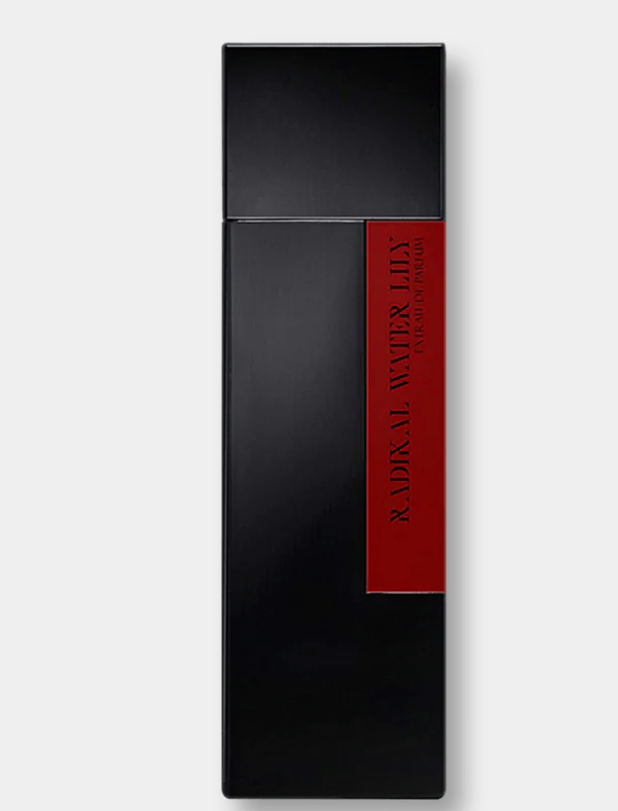
If what draws you in here is the tension between floral softness and wet shadow, it is worth looking at **Laurent Mazzone Radikal Water Lily**. It does not literally repeat Alien or Squid, but it carries a similar feeling of light moving through dark water. It is a good way to try the same idea not as a wrist experiment, but as a complete perfume gesture. Sometimes one sample is enough to understand that contrast on skin speaks more convincingly than any note pyramid.